Shopper's Guide•Stress & Cortisol
6 things I changed when stress started showing up on my face
Summary: Puffy mornings after nights I'd actually slept. Snacking at ten. A face that looked tired before I felt it. It took me far too long to see that stress sat behind all three. Here's what I learned, and the one thing I changed.
Here's all 6 👇
1. My face was keeping score of my stress
It looked puffier after my worst days, not my worst nights. Cortisol, the main stress hormone, is meant to peak in the morning and come down by evening. When it doesn't come down, the body tends to hold on to water, and for me that showed up in the mirror first.
2. Stress, cravings and bad sleep were one loop
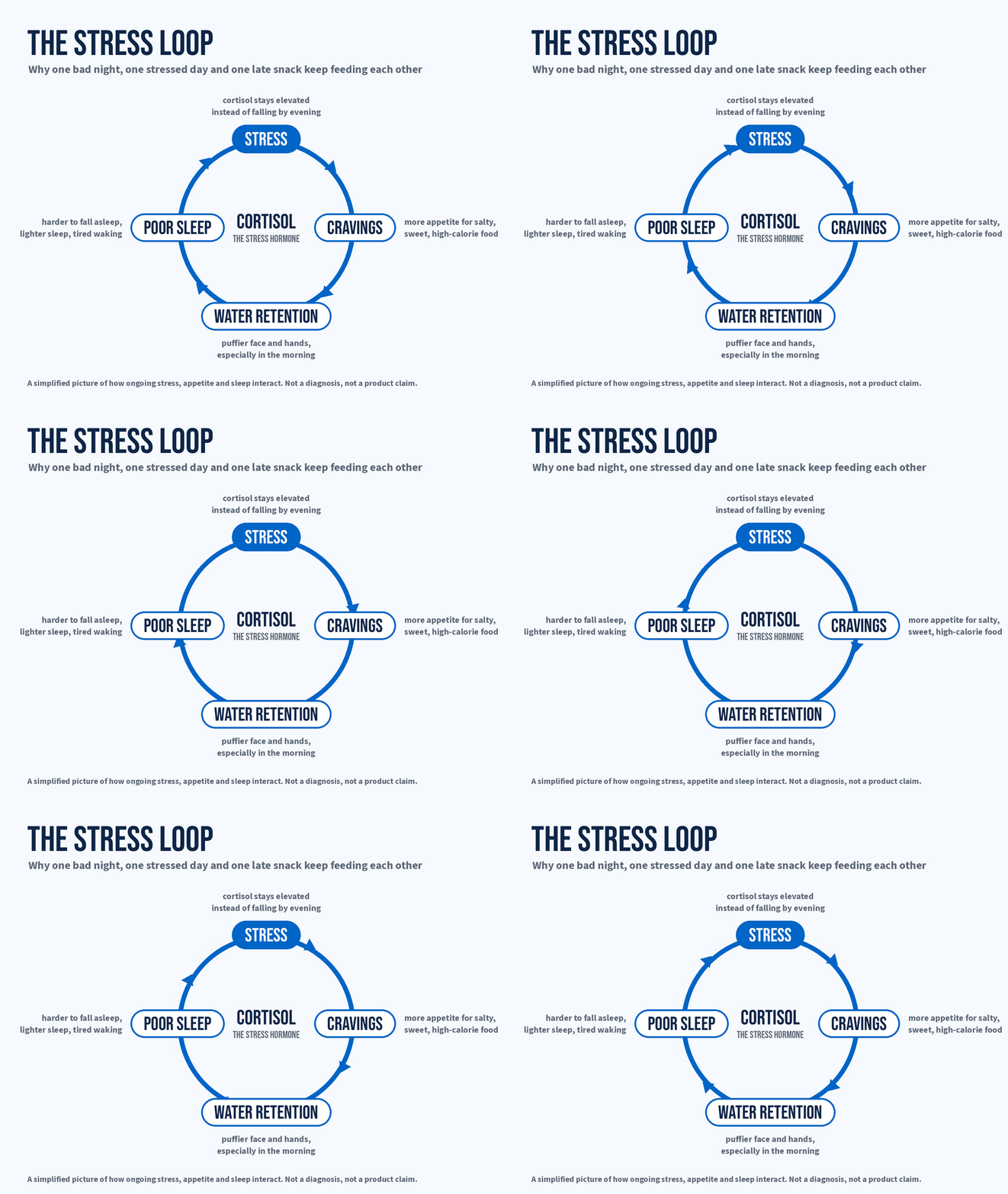
A stressful day meant cortisol that stayed up at night, which meant salt and sugar at ten, which meant bad sleep, which meant a puffy, already-stressed morning. It looked like a willpower problem. It was a stress pattern, and that changed what I tried to fix first.

3. The goal was lower cortisol, and there's a number for it
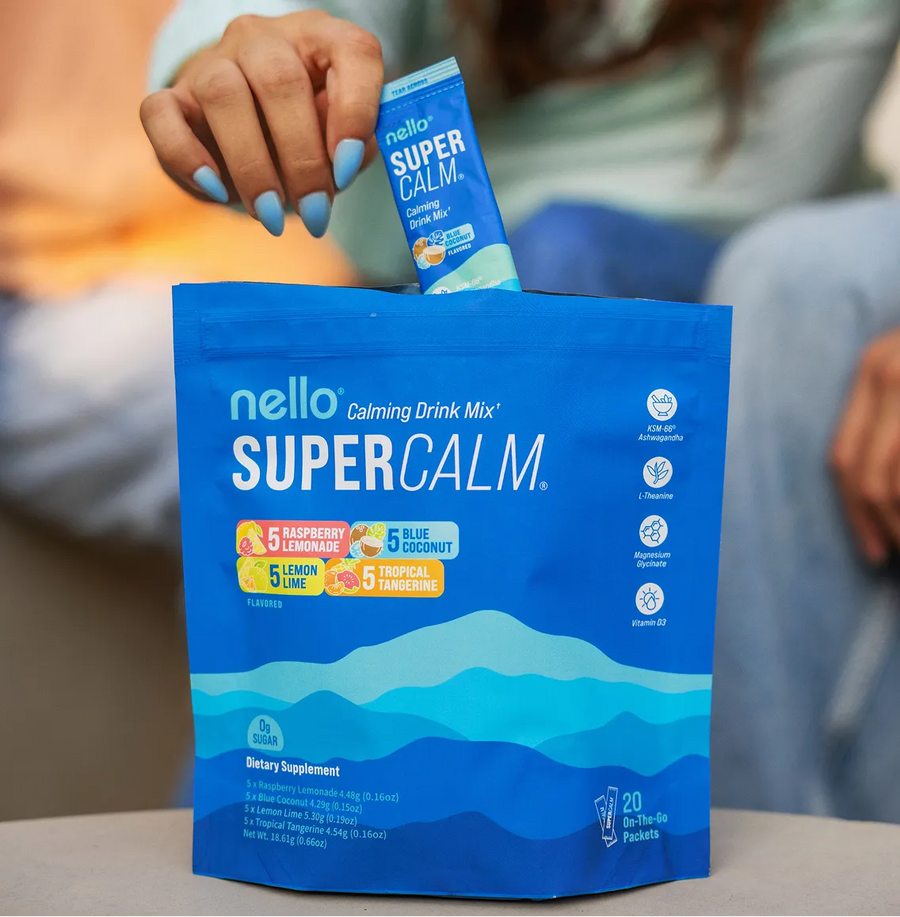
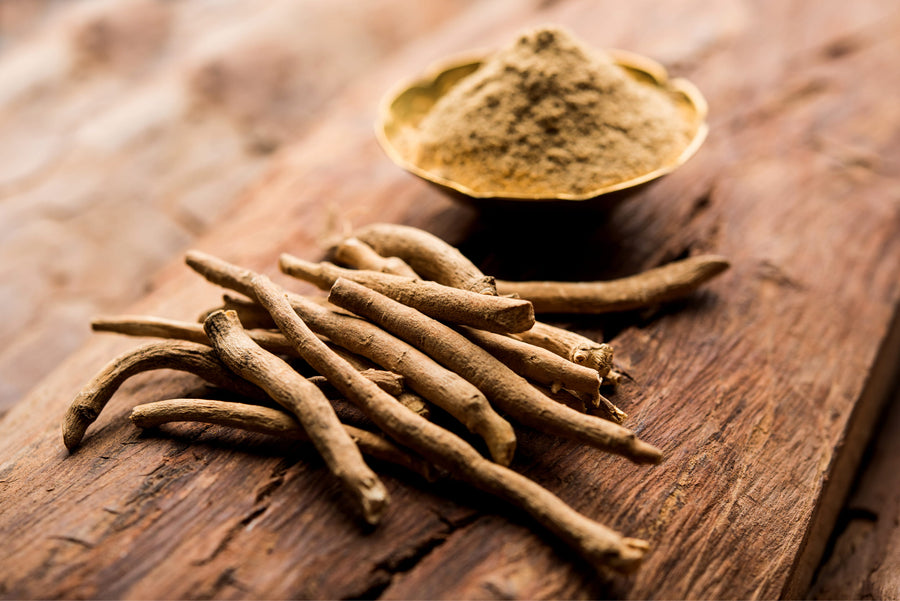
Supercalm has KSM-66 ashwagandha: 600mg a day across the two directed sticks. At that dose it was studied for eight weeks against placebo, and both perceived stress scores and serum cortisol fell significantly. The headline from the KSM-66 research is a 33% reduction in perceived stress.
Chandrasekhar et al., 2012: KSM-66 ashwagandha 600mg/day for 60 days significantly reduced perceived stress scores and serum cortisol vs placebo. Salve et al., 2019: 250mg/day for 8 weeks reduced perceived stress and serum cortisol vs placebo. Research relates to the KSM-66 ingredient, not to Nello or to this product.
4. The ten o'clock cravings have been studied too
The same 600mg a day of KSM-66 was studied in adults with stress-related food cravings. At four weeks, total craving scores had improved significantly versus placebo, including hunger, lack of control and eating in response to emotions. Not appetite suppression. Fewer of the cravings that start in your head.
Pakhale et al., 2025: KSM-66 ashwagandha 600mg/day, assessed at 4 and 12 weeks vs placebo. Research relates to the KSM-66 ingredient, not to Nello or to this product.
5. Sleep was the part of the loop I'd been skipping
In adults who slept badly, 600mg a day of KSM-66 over ten weeks meant falling asleep faster and more of the night actually asleep. Each stick also has 400mg of L-theanine, the daily amount studied for lower stress markers through a weeks-long stressor, plus magnesium glycinate and no melatonin.
Langade et al., 2021 (KSM-66 600mg/day); Unno et al., 2013 (L-theanine 400mg/day). Research relates to the ingredients, not to Nello or to this product.
6. What I take, and what I don't expect from it
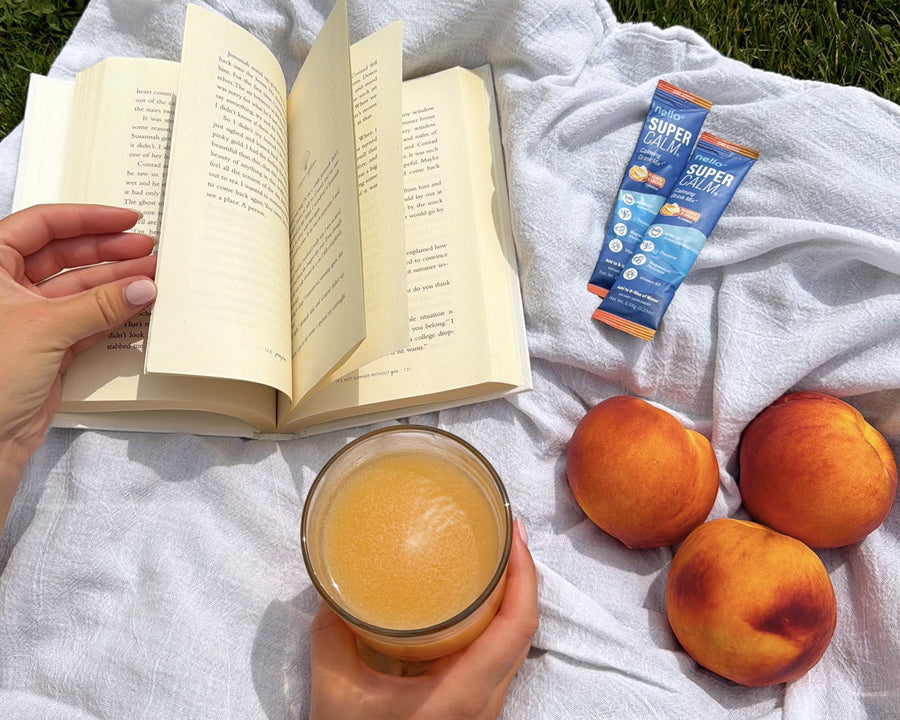
Two sticks a day in water: one mid-afternoon, one an hour before bed. Per stick that's L-theanine 400mg, KSM-66 ashwagandha 300mg, magnesium glycinate 100mg and vitamin D3 1,000 IU, five calories, zero sugar, every amount on the label. It isn't a weight-loss product. It's for the stress at the start of the loop.
See the full label →