Shopper's Guide•Skin & Beauty
6 things I check on a label before I trust a collagen drink
Summary: I read supplement labels the way other people read contracts, because the category has earned it. Here are the six things I make a collagen drink prove before it comes into my kitchen, and how Superglow held up on each one.
Here's all 6 👇
1. Every ingredient has a number next to it
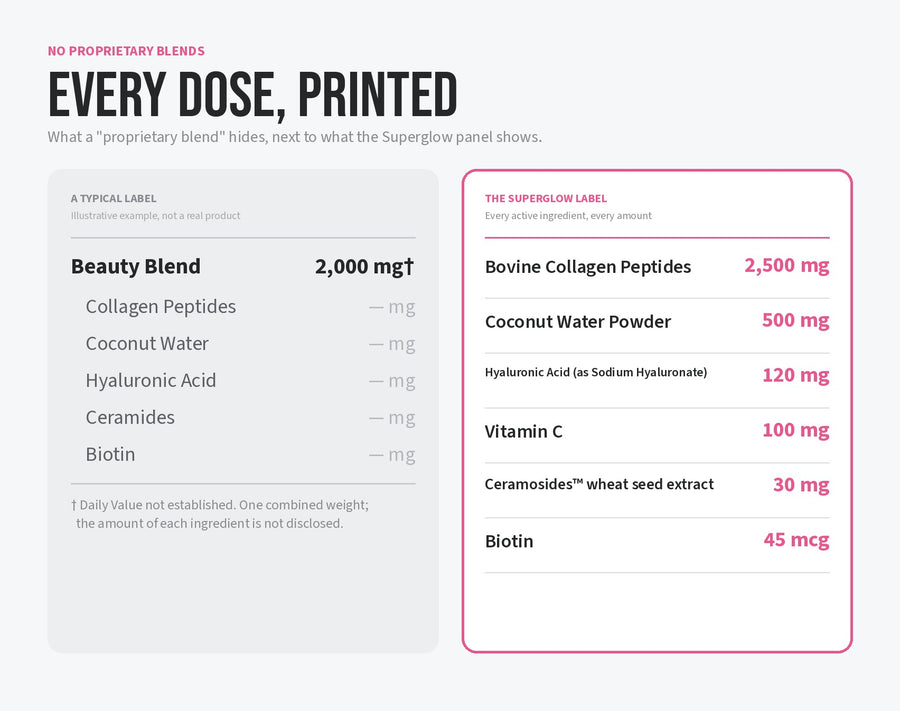
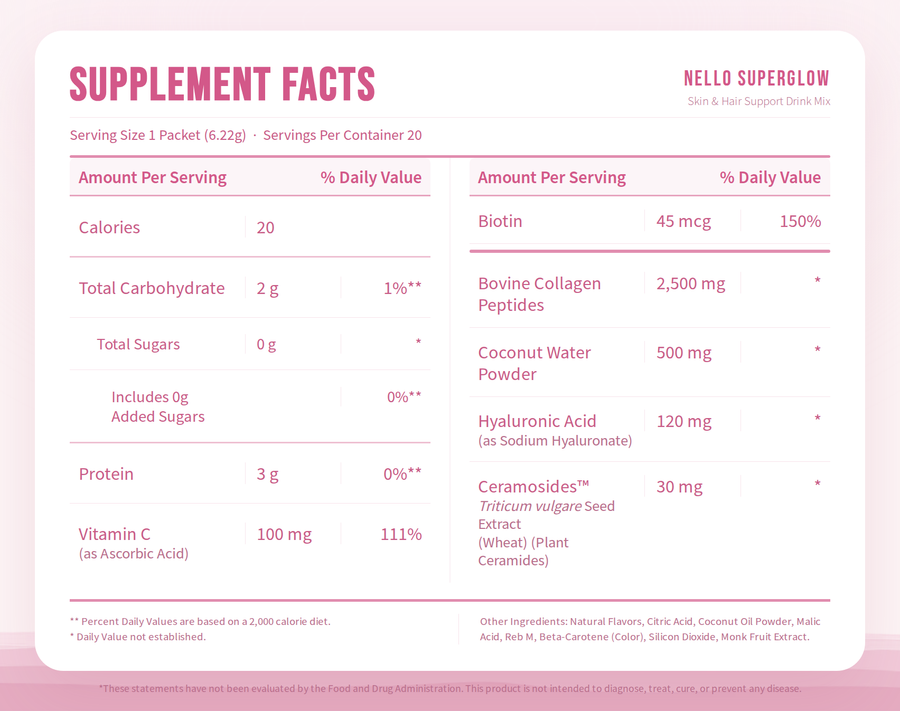
The first thing I look for is the phrase "proprietary blend". It means one combined weight and a list of names, so you can't tell whether the ingredient you're paying for is a real dose or a sprinkle for the label. Superglow doesn't do that. Bovine collagen peptides 2,500mg, coconut water powder 500mg, hyaluronic acid 120mg, vitamin C 100mg, Ceramosides 30mg, biotin 45mcg. Six actives, six numbers, and the 30mg is the one to notice.
2. The doses match the studies, not the marketing
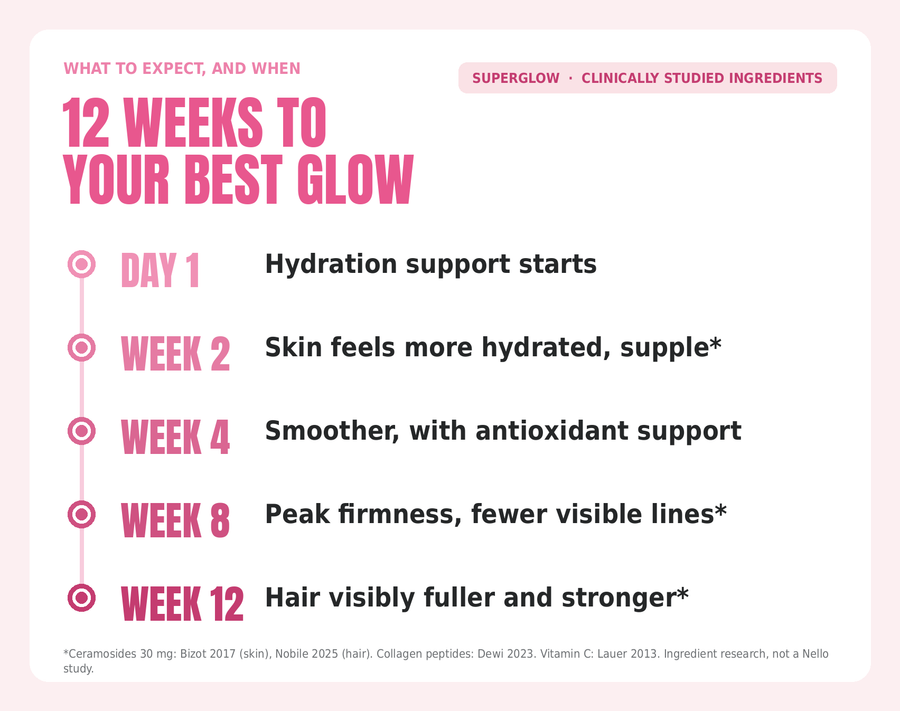
A number is only useful if it's the right one. Ceramosides at 30mg is exactly the dose in its clinical work, where skin hydration and suppleness improved by week two, hydration, firmness and wrinkle appearance peaked at week eight, and a separate hair study reported more hairs moving out of the shedding phase and back into growth. Vitamin C at 100mg matches its four-week skin antioxidant study. Collagen formulas love to quote grams; the doses that were actually studied are smaller and more specific than that.
Bizot et al., 2017 and Nobile et al., 2025 (Ceramosides 30mg); Lauer et al., 2013 (vitamin C 100mg). Clinical research relates to the ingredients, not to Nello or to this product.
3. It's third-party tested and made in a GMP-certified facility
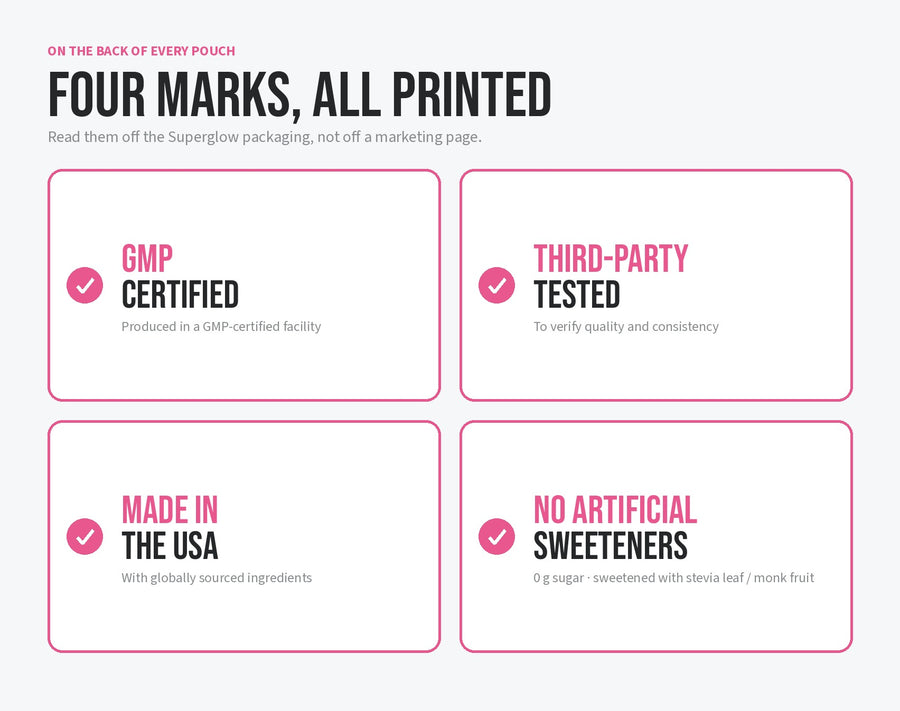
Two marks on the back of the pouch, and I checked both against the company's own words. Superglow is produced in a GMP-certified facility and third-party tested to verify quality and consistency. It's made in the USA with globally sourced ingredients, which is the honest version of that claim, since most of what goes into a supplement like this isn't grown here. I'd rather be told that plainly than have it glossed over.
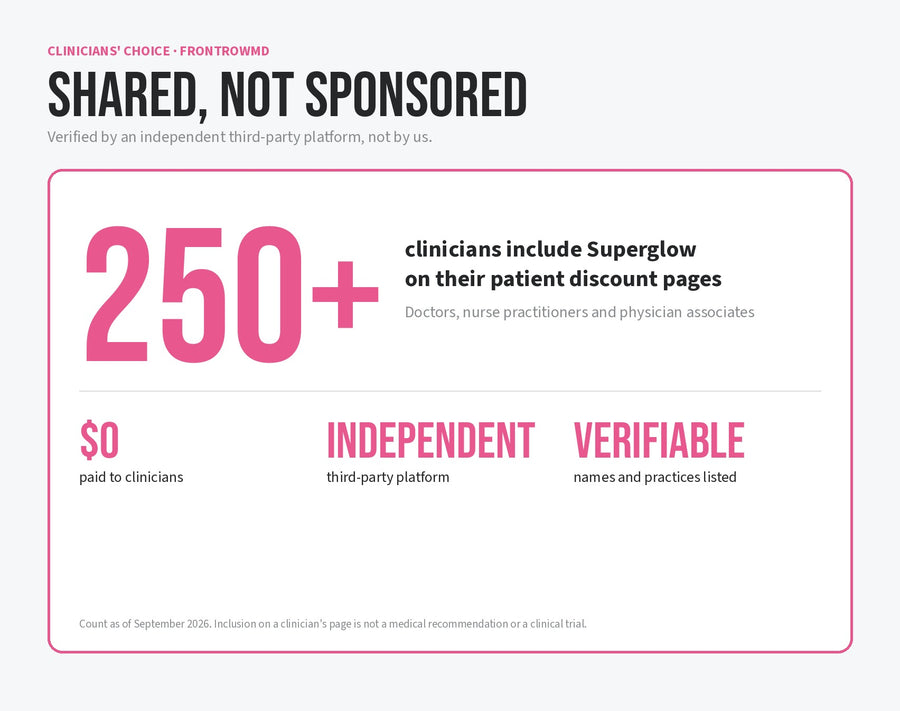
4. More than 250 clinicians put it on their patient pages, and none were paid
This is the one I was most skeptical of, so I read the fine print. FrontrowMD is an independent third-party platform where doctors, nurse practitioners and physician associates build free discount pages for their own patients. As of this month, more than 250 of them have chosen to include Superglow on those pages, out of hundreds of products, and the platform never compensates them for it. The names and practices are listed, so you can check. It isn't a prescription or an endorsement, and they're careful to say so. It's a few hundred medical professionals choosing to put this in front of their patients when they didn't have to.
FrontrowMD Clinicians' Choice, 258 clinicians as of September 7, 2026. Clinicians are not compensated; inclusion on a clinician's patient page is not a medical recommendation.
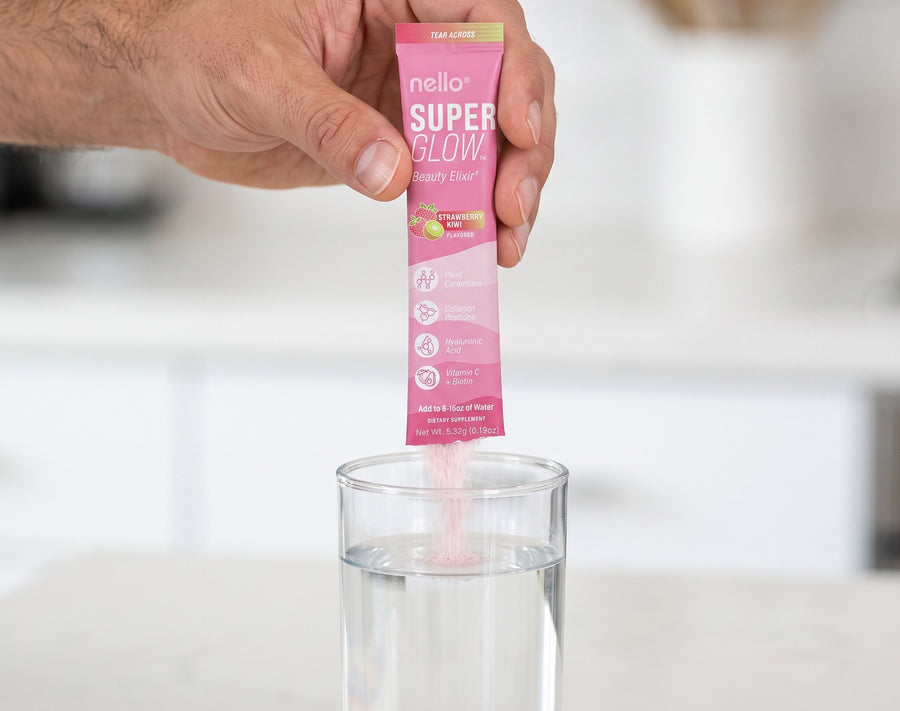
5. What isn't in it matters as much as what is
0g sugar. Sweetened with Reb M and monk fruit rather than sucralose or acesulfame, colored on this panel with beta-carotene. One honest caveat, printed in full: the Ceramosides are a wheat seed extract, so the label says wheat, and the product is batch-tested gluten-free below 5ppm. The collagen is bovine, so it isn't vegan, and the label doesn't pretend otherwise. I trust a panel more when it tells me the inconvenient things.
6. Read the panel yourself
Everything above is on the label. That's the point. If a company prints the dose of every ingredient, names the facility standard, tests with an outside lab and lets an independent platform list the clinicians who share it, you don't have to take the marketing on faith, because you can check the panel. Here it is.
See the full label →